Home » Modern Wine Room LED Lighting: An Acrylic Panel Project in Newport Beach
Modern Wine Room LED Lighting: An Acrylic Panel Project in Newport Beach
>> Click here to visit our WINE CELLAR DESIGN GALLERY
Andre Trabazos, a custom wine room design expert with Coastal Custom Wine Cellars, built this modern wine room in Newport Beach, California, for a couple with two different collections to show off: she collects wine, he collects spirits. That split collection shaped nearly every decision in this design — starting with the lighting.
The centerpiece of this project is acrylic LED panel lighting, a technique that’s become one of the most requested features in modern wine rooms we build today. Below, we’ll walk through exactly how it works in this project, what it took to solve for the room’s sun exposure and glass walls, and answer the questions we hear most often about this kind of wine cellar lighting.
Contemporary LED Lighting Innovation for Home Wine Cellars
What Is Acrylic LED Panel Lighting?
Acrylic LED panel lighting is a wine cellar lighting technique that sandwiches an LED strip between a wall or shelf and a sheet of translucent acrylic, mounted on a standoff about an inch off the surface. Instead of a visible fixture, the acrylic diffuses the LED strip into an even, subtle glow across the whole panel. It’s become a signature of modern wine room design because it lights the bottles themselves rather than the room around them — and because the same basic technique works as a back wall, a shelf, flooring, or even a ceiling detail, all from one lighting system.
Overview of the Modern Wine Room
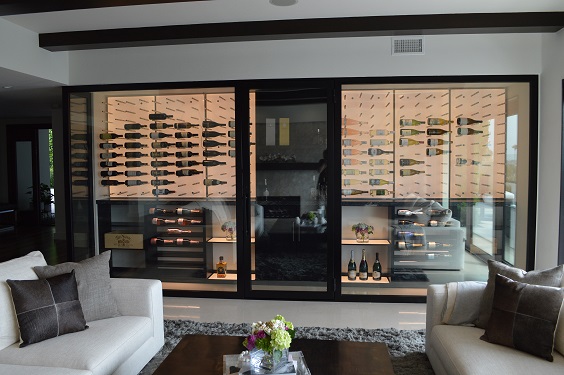
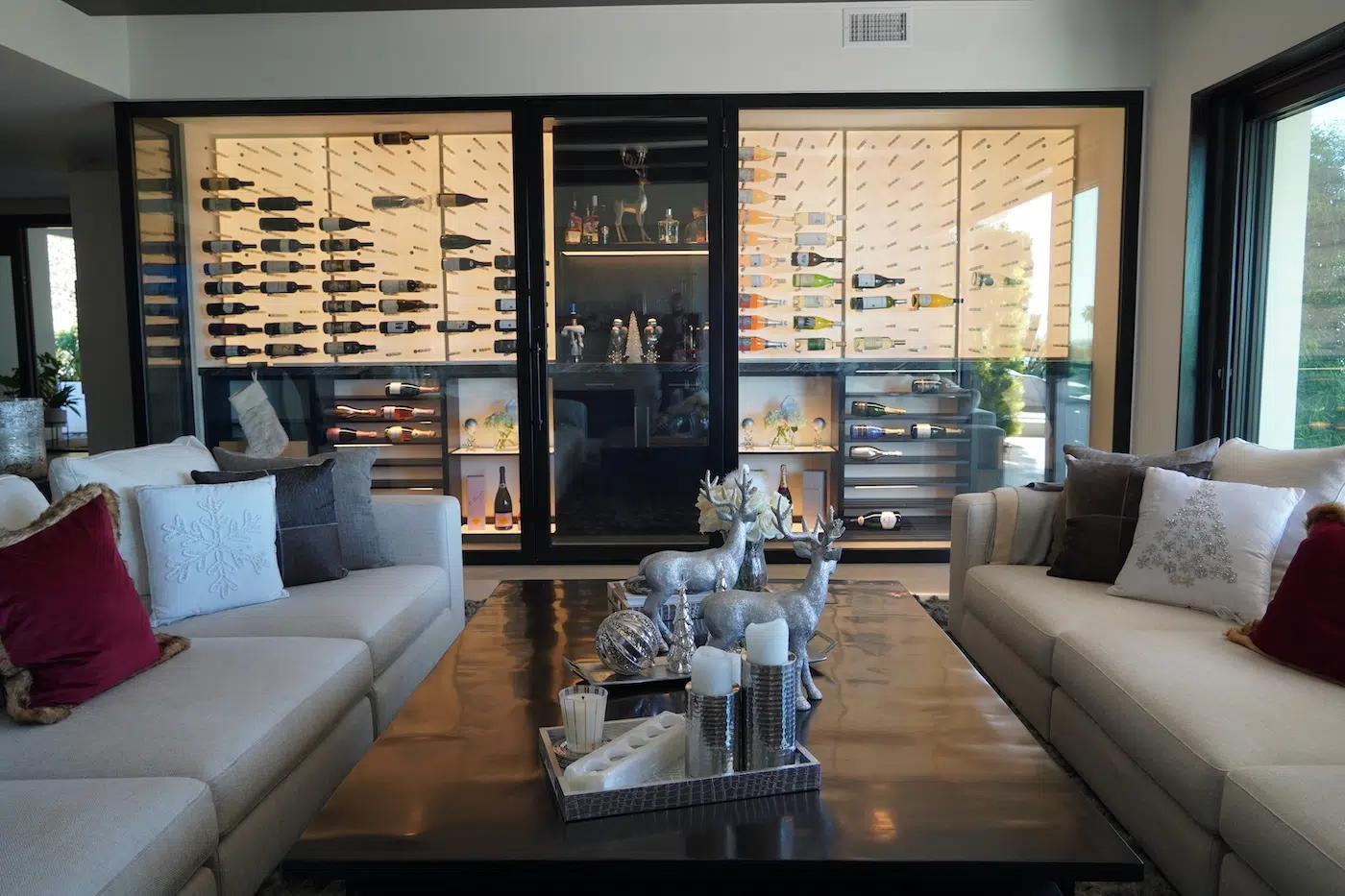
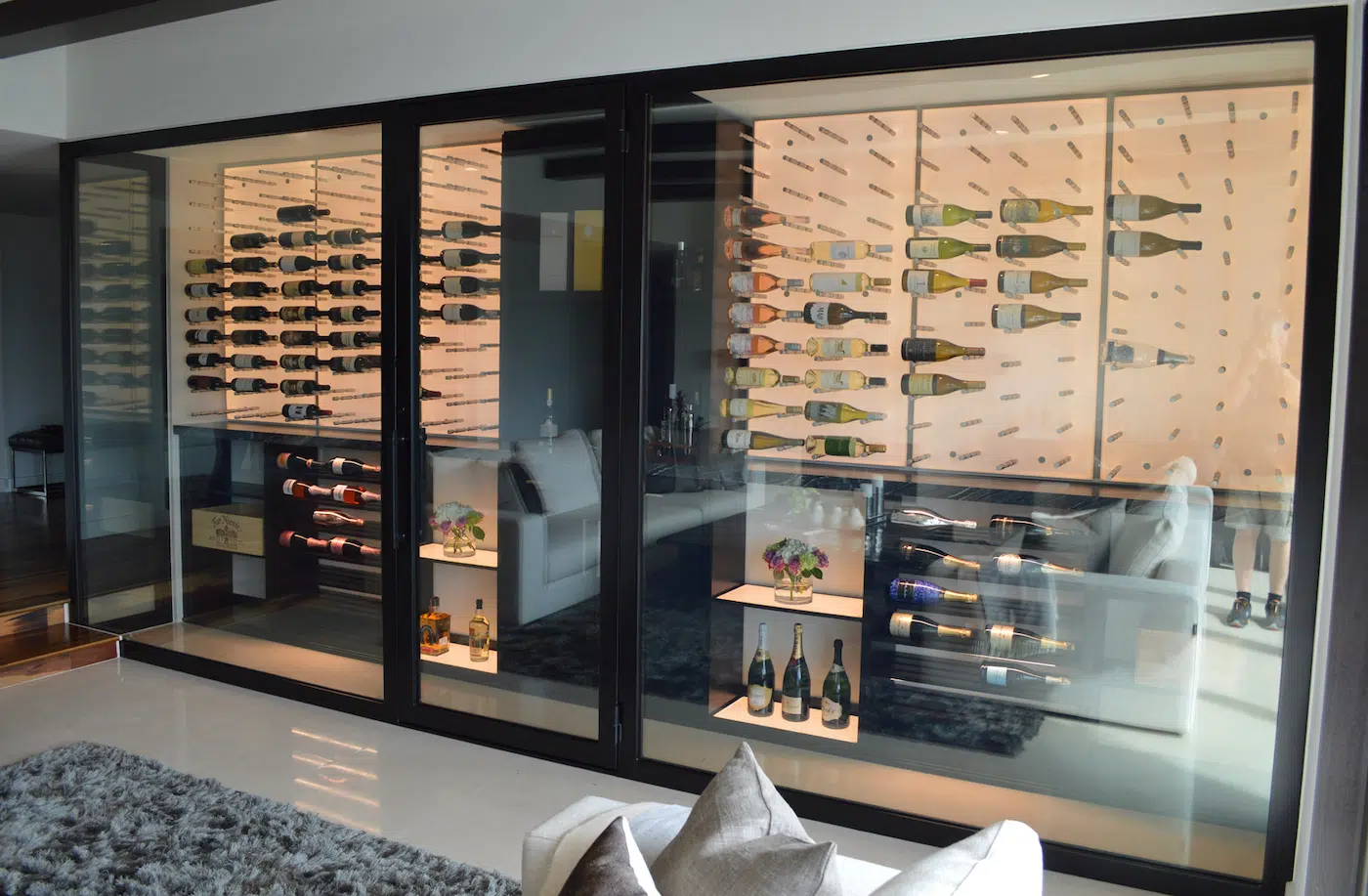
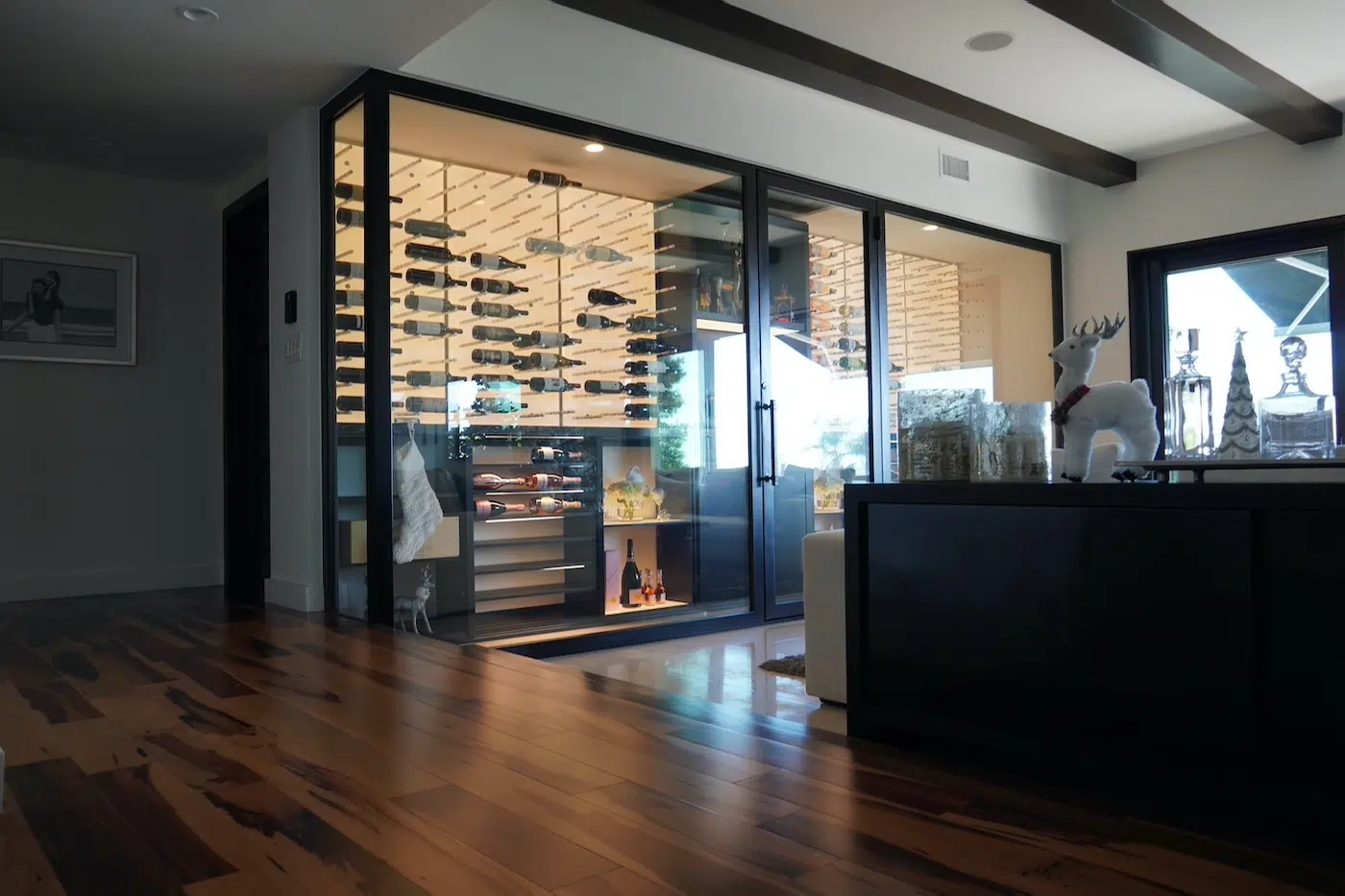
Without even going inside this modern wine room, you can already see the beautiful presentation of the wine bottles.
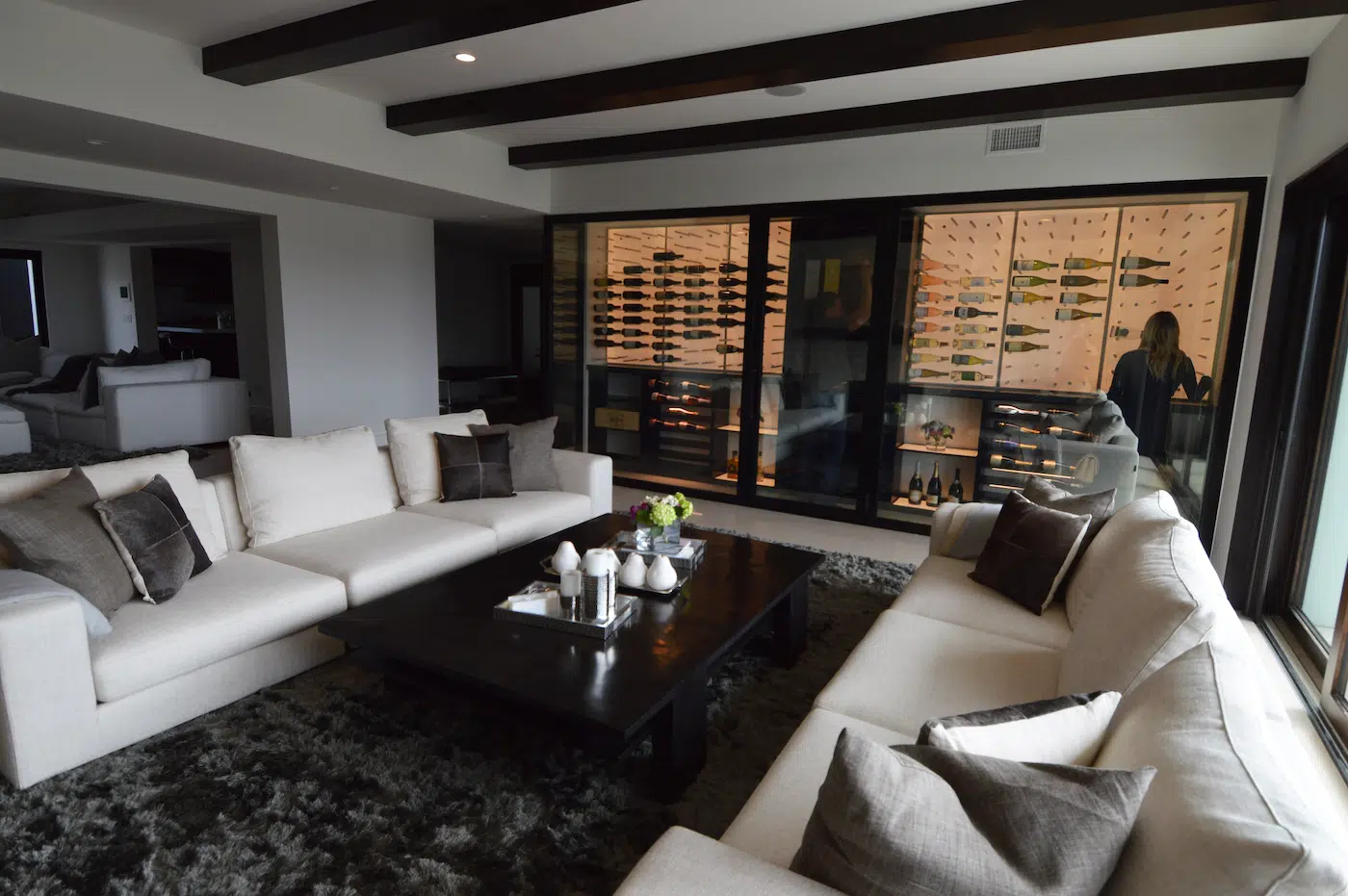
Without even stepping inside, the presentation of the wine bottles is the first thing you notice. Glass walls make the collection visible from every angle, and two large acrylic LED panels — separated by a shelf and a small display area for decanting or art — anchor the room. Below both panels, dedicated shelving holds champagne and spirits bottles, with self-closing drawers and cabinets tucked in alongside.
The Acrylic LED Light Panel: This Room’s Signature Feature
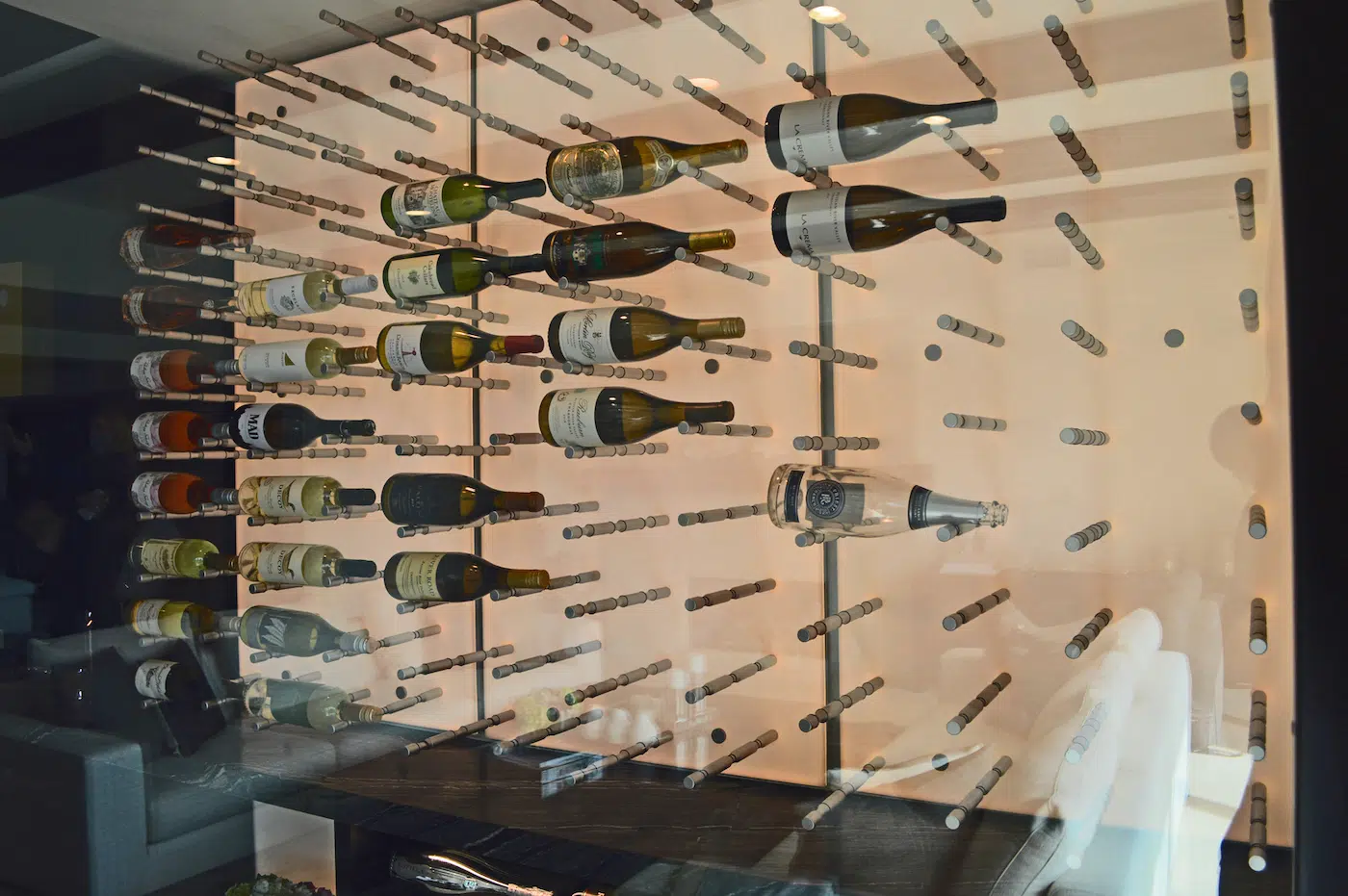
Every modern wine room owner wants their collection presented elegantly, and this project pushed that a step further with a full acrylic LED light panel. The lighted back panel is a subtle, even glow behind the bottles — bright enough to highlight the collection without overpowering the room.
“One of my favorite details is the 3/4-inch acrylic board. It diffuses the LEDs into a soft, even glow, so the wall feels clean and understated when the lights are off, then transforms into a striking architectural feature the moment they’re switched on.” — Andre, Lead Designer
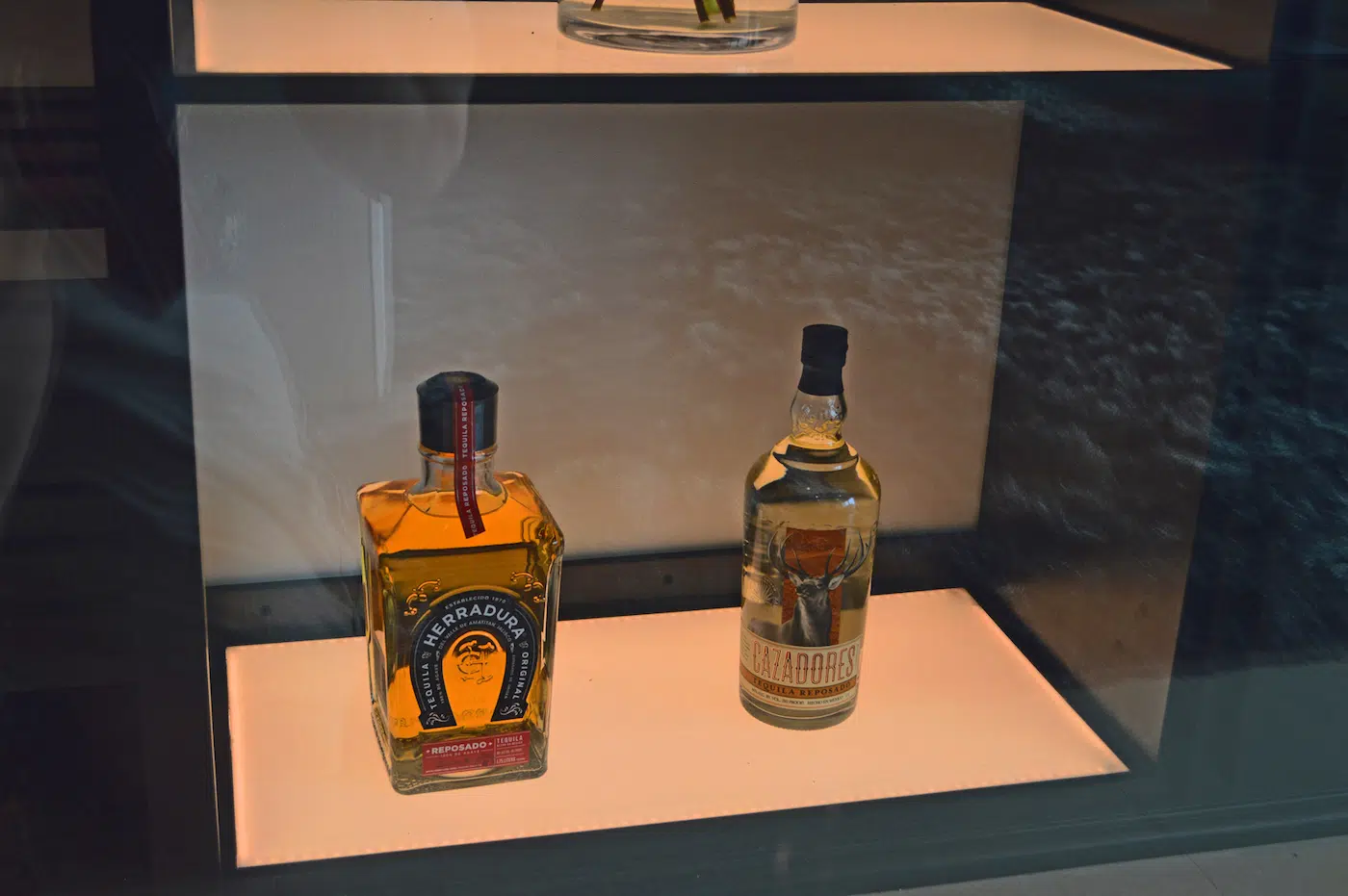
The team also built a dedicated section for the husband’s spirits collection, lit the same way. Because light passes directly through a bottle when it’s set against the panel, the effect is especially striking on colored spirits bottles.
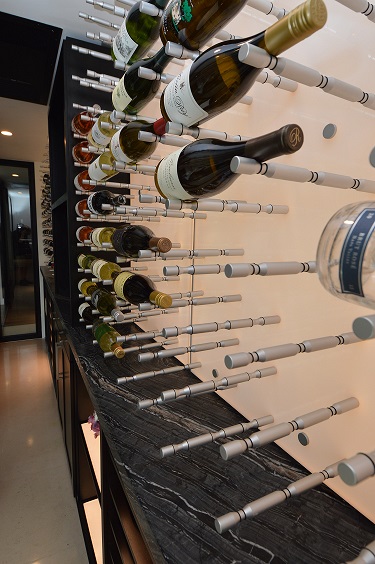
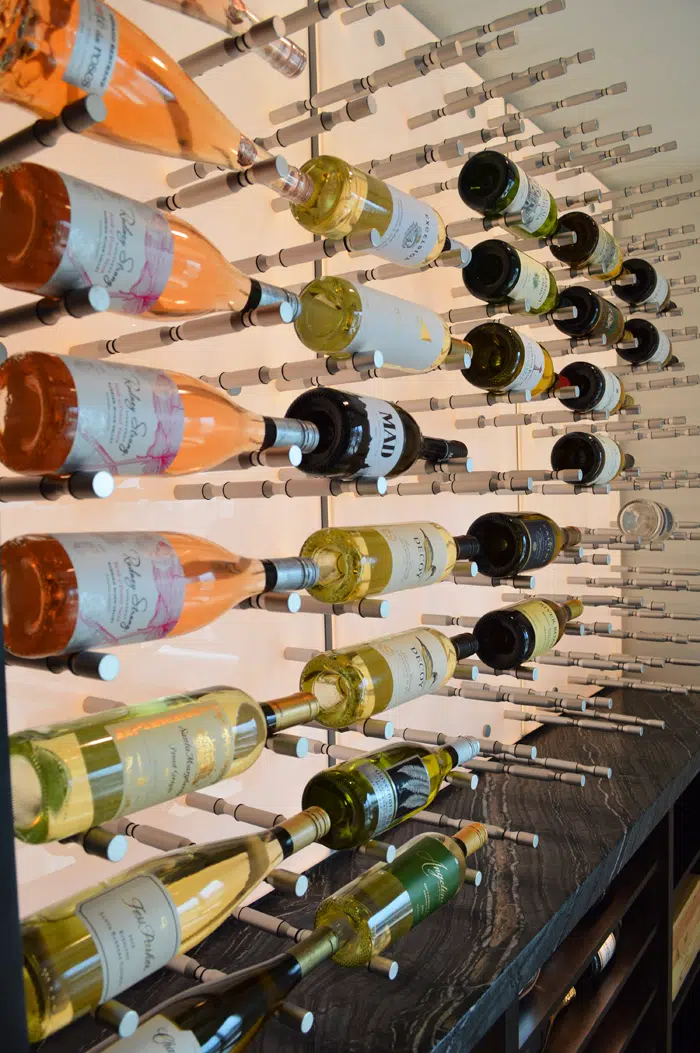
The subtle light radiating from the LED panel drastically enhances the presentation of wine bottles placed on the modern wine racking system.
Contemporary Metal Wine Pegs for the Racking System
To finish the modern, minimalist look, the team installed brushed metal wine pegs from Wine Cellar Designers Group (WCDG). These pegs are triple-deep — each pair holds up to three bottles — and from a distance, bottles appear to float rather than sit on a shelf. With the LED panel lit, the pegs’ glossy finish reflects light back onto the bottles, adding another layer of shine to the display.
Where Else Acrylic LED Lighting Works
This is one of the most flexible features we build into modern wine rooms, because the same acrylic-and-LED construction isn’t limited to a back wall. In this project alone, it’s used as the main wall panel and as base shelving for the vertical display section. On other projects, we’ve used the identical technique as flooring accents and as ceiling details — meaning a homeowner can commit to one lighting system and one look, then extend it anywhere in the room rather than mixing lighting types.
Common Mistakes to Avoid with Modern Wine Room Lighting
Underestimating sun exposure with glass walls. This room’s location gets sun for much of the day, which raises both temperature and humidity — a problem for any wine collection, and a particular problem for glass, which promotes condensation as conditions fluctuate. The couple wanted glass walls regardless, so the team enclosed each panel in a metal frame, sealed the channel between frame and glass with insulation, and eliminated the condensation risk entirely. As a side benefit, the sealed frame also let the cooling system run more efficiently. If you’re planning a glass-walled modern wine room, treat this as a required step, not an optional upgrade — it’s the single most common failure point in glass installations.
Not accounting for reflection off metal racking. Glossy metal pegs and LED backlighting look great together, but the same reflectiveness that makes bottles “float” can also throw glare back at anyone standing close to the panel. It’s worth viewing the racking finish and the panel brightness together during design, not as two separate decisions.
An Obstacle the Team Had to Resolve While Building the Modern Wine Cellar
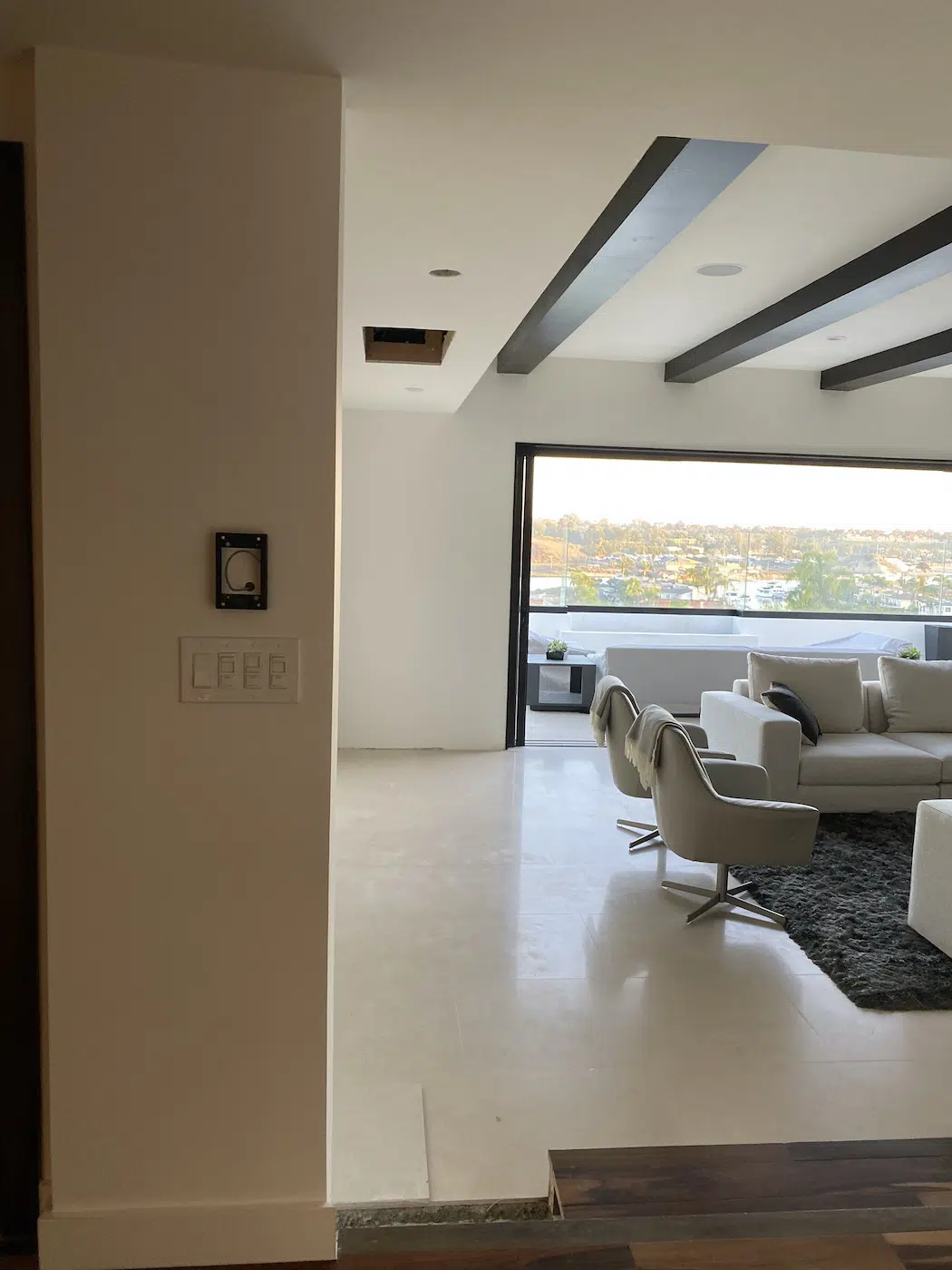
The area allocated for building this residential wine room is exposed to sunlight for much of the day. This can affect the temperature and humidity in the room and could ruin the quality of all wines stored in the proposed wine cellar. Furthermore, the couple wanted glass panels for the walls of their wine cellar. Glass tends to promote condensation inside the wine cellar due to temperature and humidity fluctuations oustide of the wine room.
Fortunately, the Coastal team made a quick and straightforward solution to deter condensation inside the modern wine room. The crew enclosed the glass panels with metal frames. These metal frames completely seal all glass panels. Additionally, the team filled the channel between the metal frame with insulation materials. This installation ensured that no condensation will ever occur inside the wine cellar. As an added benefit, the cooling system will work more efficiently because of the metal frame enclosure.
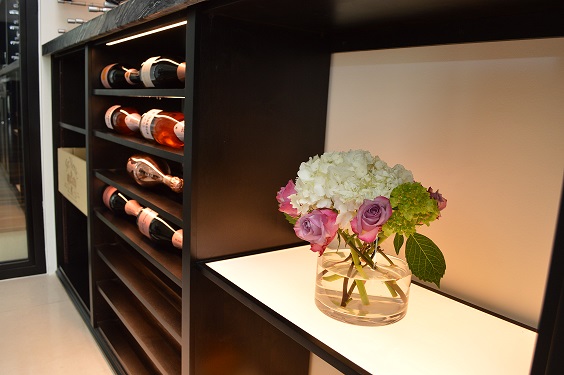
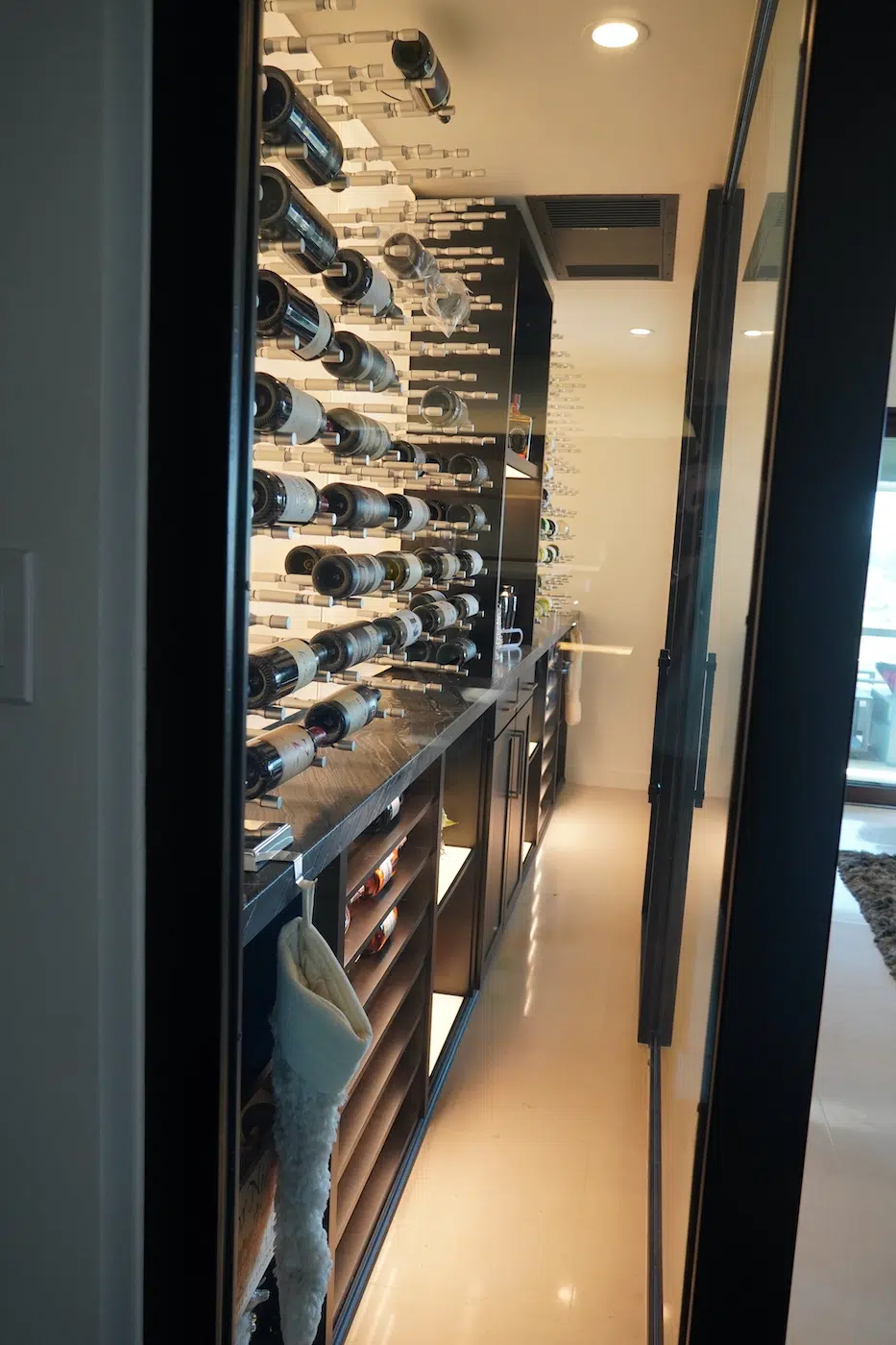
LED strips were mounted on a channel to add emphasis to bottles placed on the traditional horizontal display shelves. The vase placed on the modern LED light panel has a similar effect. This combination of traditional and modern elements looks good in this wine cellar.
Split-Type Cooling: Matching the System to the Room
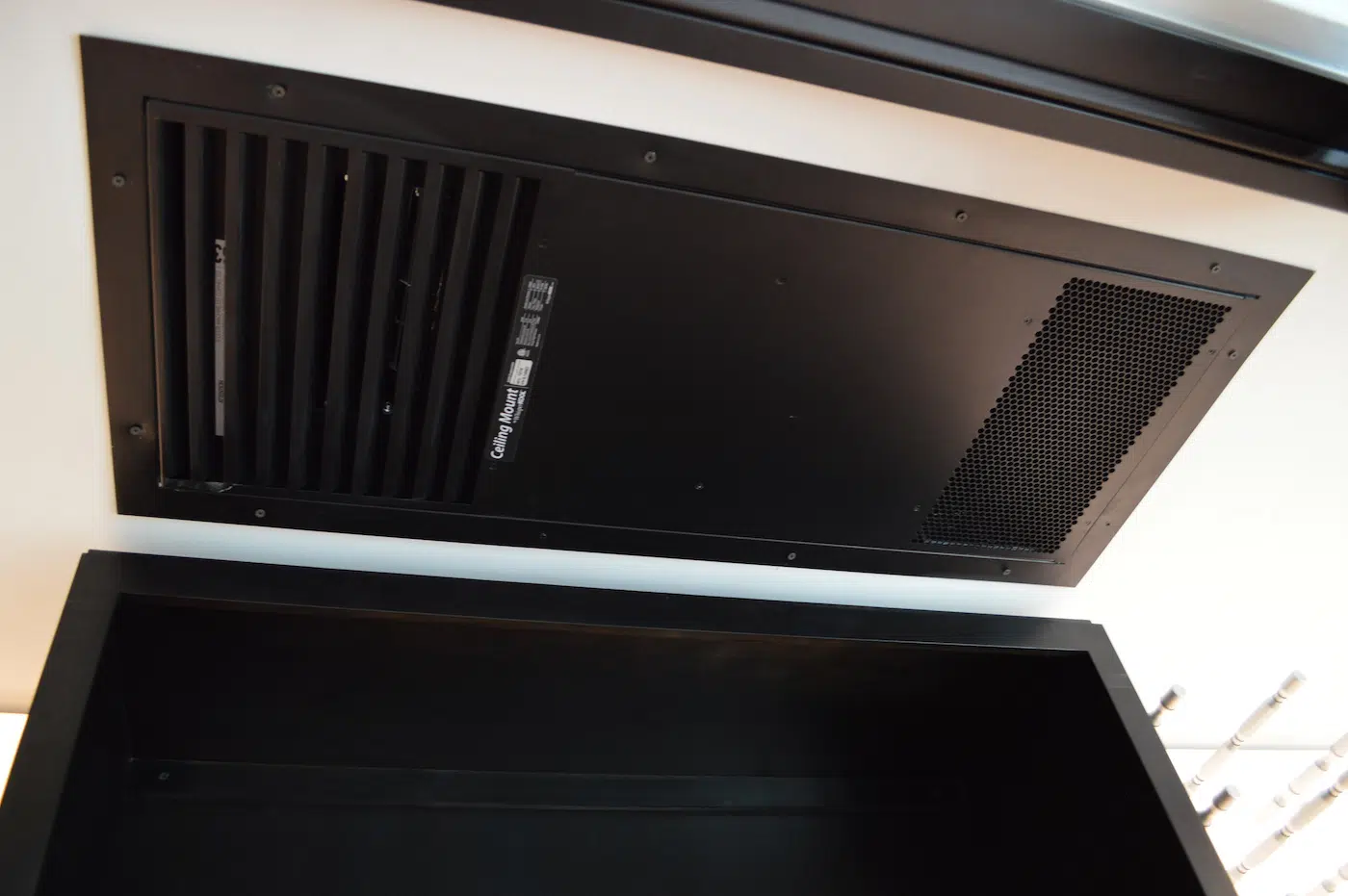
Glass walls need a cooling system built for the load, not a standard self-contained unit. For this project, the team installed a WhisperKOOL 7000, a split-type, ceiling-mount system where the condensing and evaporating units are separate. That let the team place the condensing unit outside the wine room entirely — on the roof — venting operational heat away from the collection, with the rest of the unit concealed in the soffit. Only the vent is visible inside the room, positioned in line with the entrance for a cleaner look.
Maintenance & Durability: What to Expect from Acrylic LED Panels
Acrylic LED panels are a low-maintenance feature relative to traditional fixture-based cellar lighting, but a few things are worth knowing before you commit to one:
- LED strips are built for the long haul. Like most enclosed LED installations, these strips are designed to run for years of regular use before a section needs replacing — far longer than a traditional bulb.
- The channel design matters for repairs. Because the LED strip sits in its own channel behind the acrylic, a failed section can typically be addressed without removing the whole panel or disturbing the racking in front of it.
- Clean the acrylic gently. A soft, dry or lightly damp cloth is enough — avoid ammonia-based glass cleaners, which can cloud or micro-scratch acrylic over time the way they wouldn’t with real glass.
- Dimming is worth building in from the start. Most of our clients end up preferring a dimmable setup so the panel can shift from a subtle daytime glow to a brighter showcase for entertaining.
Modern Wine Room vs. Traditional Wine Cellar Lighting
Traditional wine cellar lighting tends to be indirect and low — sconces, recessed cans, or hidden fixtures meant to protect the wine and keep the room dim and cave-like. Modern wine room lighting flips that: the light itself becomes part of the display, built into the walls, shelves, or floor rather than aimed at them. That’s exactly the choice this couple made — they wanted a room that read as a lit display case from the moment you walked into the living room, not a hidden cellar you’d only notice once you stepped inside.
Work with Experts to Build Your Modern Wine Room
Modern wine rooms work best when contemporary and modern elements are used with restraint — a minimalist look, free of the ornate detail you’d expect in a traditional cellar, built around whatever trending, innovative feature keeps the space feeling current. The Coastal team built this modern wine room around exactly that idea, and the client’s finished collection speaks for itself.
Looking to build a modern wine room in your home? Call us and we’ll walk you through the process.