Custom Wine Cellars designed to serve the world's thirst for true taste
Home Wine Cellars
For many wine lovers, a collection starts with a few favorite bottles tucked into a kitchen cabinet or wine refrigerator. Over time, those bottles multiply—special vintages from vacations, anniversary gifts, limited releases, and everyday favorites that deserve better storage. Eventually, they outgrow the shelf they started on.
A home wine cellar is a dedicated, insulated space designed to protect that collection with stable temperature, humidity, and proper storage while becoming a natural extension of your home. Whether it’s a walk-in cellar, a converted closet, a frameless glass wine wall, an under-stair display, or a custom wine room, the right design keeps your wines aging beautifully while creating a feature you’ll enjoy every day.
Get Your Free 3D Wine Cellar Design
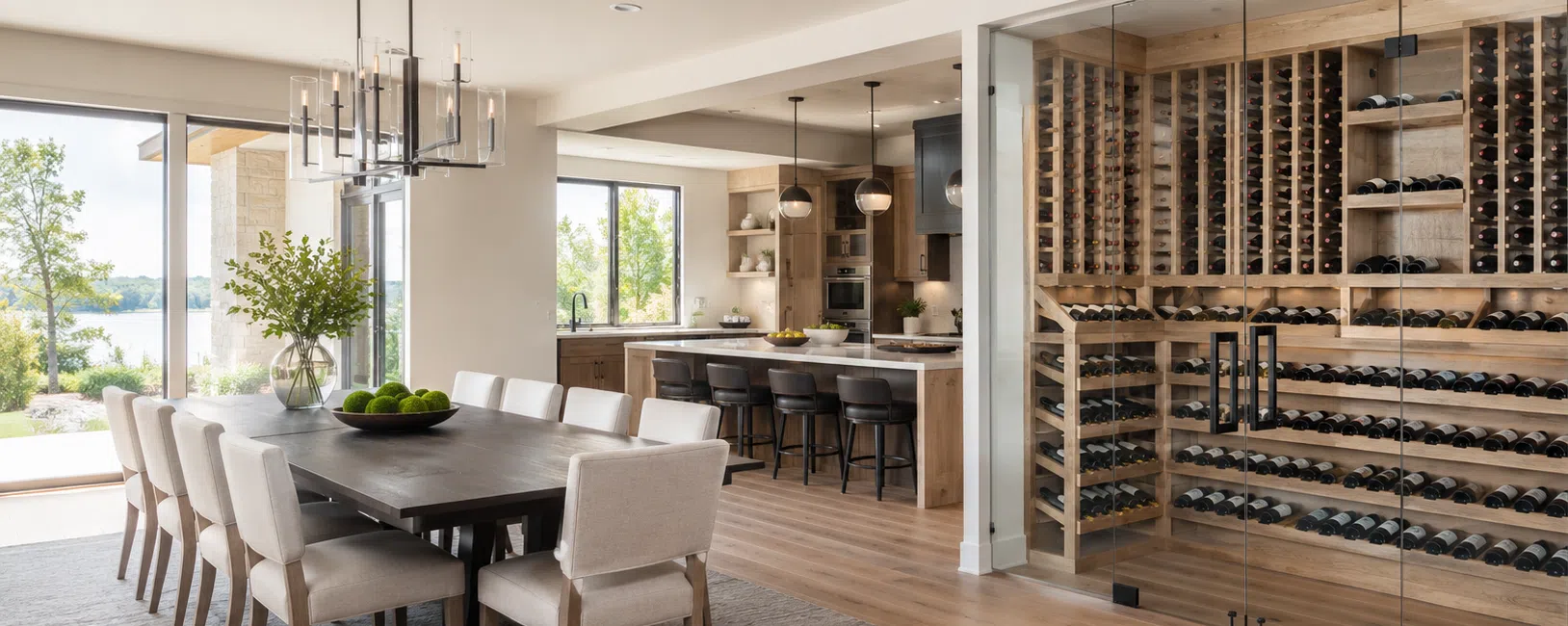
What Is A Home Wine Cellar?
A home wine cellar is a purpose-built, climate-controlled environment that stores wine under the conditions it was meant to age in. Unlike a spare closet or basement corner, it maintains consistent temperature and humidity while protecting bottles from damaging light and vibration. Custom wine racking is designed to accommodate everything from standard bottles and Champagne to magnums, cases, and display bottles.
Not every home wine cellar looks the same—and that’s part of the appeal! Some homeowners prefer the simplicity of a wine refrigerator for a modest collection, while others choose a furniture-style refrigerated wine cabinet that blends into an existing room. A custom wine closet transforms an unused closet into a built-in storage space, while a dedicated walk-in wine cellar offers room for larger collections, custom cabinetry, frameless glass walls, tasting areas, and statement displays that become part of the home’s architecture.
As Andre Trabazos, Coastal’s lead wine cellar designer, often tells clients:
“The best wine cellar isn’t determined by its size. It’s the one that feels like it was always meant to be part of the home.”
The right solution depends not only on how many bottles you own today, but where your collection is headed. A thoughtfully designed wine closet or premium wine cabinet can comfortably serve collections of around 100 to 500 bottles, while collectors planning for long-term growth often benefit from a dedicated wine cellar with room to expand. Designing for tomorrow’s collection—not just today’s—is one of the smartest decisions a wine collector can make.
Home Wine Cellar Requirements
Wine benefits most from stability, so the room, door, glass, insulation, vapor barrier, lighting, and cooling equipment must work as one system.
| Requirement |
Recommended Specification |
Why It Matters |
| Temperature |
Target about 55°F; generally 45–65°F when stable |
Limits damaging temperature swings |
| Relative humidity |
Usually 60–70% |
Helps protect corks without excess condensation |
| Light and UV |
No direct sun; low-heat LEDs; UV-conscious glass where needed |
Limits heat and light exposure |
| Vibration |
Isolate mechanical equipment from bottle storage |
Reduces movement around aging wine and sediment |
| Insulation |
Closed-cell spray foam preferred; thickness based on heat load |
Maintains temperature and reduces cooling demand |
| Vapor barrier |
Continuous on the warm side, or correctly installed closed-cell foam |
Prevents moisture migration and mold |
| Door and glass |
Insulated where needed, with gaskets and a sealed threshold |
Keeps conditioned air inside |
| Airflow |
Clear space around racks and equipment |
Supports even temperatures and service access |
Wine Guardian identifies 55°F as the conventional target and 45–65°F as a workable range when conditions remain stable. Maintaining that stability, however, depends on more than just the cooling system—it begins with a properly insulated cellar envelope. That’s why Coastal commonly specifies 2-lb-density closed-cell spray polyurethane foam, which helps minimize temperature fluctuations and improve energy efficiency.
Types of Home Wine Cellars
Home wine cellars can be designed to fit nearly any space, collection size, or interior style. From compact closet conversions and refrigerated cabinets to full walk-in cellars and glass-enclosed wine rooms, each option offers a different balance of storage, accessibility, and visual impact. 
Here are the most common:
- Walk-In Home Wine Cellar
- Under-Stair Wine Cellar
- Closet Conversion
- Glass Wine Room or Wine Wall
- Basement Wine Cellar
- Kitchen or Dining Room Wine Cellar
- Refrigerated Wine Cabinet
Home Wine Cellar Ideas
Explore home wine cellar ideas for closets, basements, under-stair spaces, kitchens, dining rooms, and other areas of the home.

Modern Glass Wine Cellar
Turn your wine collection into an architectural feature with glass walls, contemporary racks, and integrated lighting.

Under-Stair Wine Cellar
Custom wine racks can follow the slope of a staircase and transform an overlooked space into valuable wine storage.
Wine Closet Conversion
Convert an existing closet into a compact climate-controlled cellar without sacrificing an entire room.

Dining Room Wine Cellar
Position the cellar near the dining room to keep bottles accessible while creating a striking entertaining feature.

Basement Wine Room
A basement can provide space for high-capacity wine racks, case storage, displays, and a dedicated tasting area.

Contemporary Wine Wall
Label-forward metal or cable racks create a clean display that works beautifully in modern living spaces.
How Much Does A Home Wine Cellar Cost?
A home wine cellar can cost about $5,000 to $100,000 or more. Current national guides place the average professionally built cellar near $40,000, but a compact closet and a large architectural glass room are very different projects.
| Home Wine Cellar Type |
Typical Planning Range |
| Refrigerated wine cabinet or simple display |
$3,000–$10,000+ |
| Basic climate-controlled closet conversion |
$5,000–$15,000 |
| Custom wine closet with upgraded racks, glass, and split cooling |
$15,000–$30,000+ |
| Small custom walk-in home wine cellar |
$20,000–$50,000+ |
| Architectural glass room or larger luxury cellar |
$40,000–$100,000+ |
The cost of a home wine cellar isn’t determined by a single feature—it’s the combination of dozens of design decisions working together. The size of the space, site preparation, wine racking materials, cooling system, insulated glass, doors, cabinetry, lighting, specialty finishes, and mechanical work all influence the final investment.
For example, a through-wall cooling unit is typically more budget-friendly than a ducted or split system, while custom hardwood racking and expansive frameless glass enclosures can significantly elevate both the appearance and the cost.
One thing we always tell homeowners is that every wine cellar is unique. Two cellars with the same bottle capacity can have very different budgets depending on the home’s construction, design goals, and level of customization. That’s why the figures on this page should be viewed as planning ranges rather than fixed prices.
Instead of guessing, Coastal begins every project with a free 3D wine cellar design. It allows you to see exactly how your cellar will look, understand the recommended cooling system and materials, and receive a realistic budget before construction begins—so you can make confident decisions without surprises.
Get a Free Wine Cellar Estimate
Does A Wine Cellar Add Value To Your Home?
For many homeowners, the value of a wine cellar goes beyond resale. It’s about creating a space you’ll enjoy for years—whether that’s hosting dinners, showcasing a growing collection, or simply having every bottle stored exactly as it should be.
From a real estate perspective, a professionally designed wine cellar can certainly add value, but it’s best viewed as a premium home upgrade rather than an investment that guarantees a dollar-for-dollar return. Industry estimates suggest homeowners may recover 50% to 75% of the project cost in mid-range homes and approximately 70% to 90% in luxury properties. For example, a $40,000 wine cellar could contribute roughly $20,000 to $36,000 in resale value, depending on the home and market. These figures are estimates, not guarantees.
The home’s price point also plays a major role. Luxury real estate professionals interviewed by Kiplinger noted that custom wine cellars can be a meaningful selling feature in homes valued above $5 million, where buyers often expect specialty spaces. In more modest homes, however, an oversized cellar may appeal to a smaller pool of buyers and add less measurable value. That’s one reason many homeowners choose a beautifully designed wine closet or compact glass wine room—it delivers the lifestyle and visual impact while preserving flexibility for future owners.
Our Home Wine Cellar Build and Design Process
Every custom wine cellar starts with understanding your vision. From the first conversation to the final walkthrough, each step is designed to ensure your cellar fits your collection, your home, and the way you enjoy wine.
1. Tell Us About Your Collection
The process begins with a conversation about your collection, how you buy wine, your entertaining style, the space available, your budget, and where you see your collection in the future. These details help shape a cellar that’s designed specifically for your needs—not a one-size-fits-all solution.
2. Evaluate Your Space
Next comes a technical assessment of the room. The available space, insulation requirements, nearby heat sources, electrical access, cooling system options, glass placement, and other construction considerations are reviewed to ensure your future cellar performs as beautifully as it looks.
3. Visualize Your Cellar with a Free 3D Design
Before construction begins, you’ll receive a detailed 3D rendering of your future wine cellar. This allows you to see the wine racking layout, bottle capacity, display areas, cabinetry, materials, lighting, and overall flow, making it easy to refine the design before any work starts.
4. Personalize the Details
With the layout finalized, it’s time to choose the features that make the cellar uniquely yours. Wood species, finishes, glass, doors, hardware, display elements, and the appropriate cooling system are selected to match your home’s architecture, collection, and budget.
5. Watch Your Wine Cellar Come to Life
Construction, installation, and system commissioning bring the design from concept to reality. The room is insulated and sealed, custom wine racks are installed, the cooling system is calibrated, and every detail is checked before the cellar is ready to protect and showcase your collection for years to come.
Request Your Free 3D Design
Featured Home Wine Cellar Projects
See how Coastal Custom Wine Cellars combines climate control, custom racking, glass, lighting, and architectural details in real homes.
Modern Glass Wine Cellar in Villa Park
A living room wall was transformed into a custom glass-enclosed wine cellar with wood racks and concealed cooling.
View This Project

Hamptons-Inspired Home Wine Cellar
Light wood finishes, custom cabinetry, varied bottle displays, and a glass entry create a relaxed coastal wine room.
View This Project

San Diego Under-Stair Wine Cellar
Custom wooden wine racks follow the sloped ceiling and maximize storage inside an unused under-stair area.
View This Project

Luxury Transitional Glass Cellar
Dark wood racks, insulated glass, adjustable lighting, and concealed refrigeration create an elegant residential cellar.
View This Project

Contemporary Cable Wine Cellar
Cable wine racks, walnut cabinetry, illuminated panels, and label-forward displays create a modern custom wine room.
View This Project
Browse More Custom Wine Cellars
Frequently Asked Questions About Home Wine Cellars
Find answers to common questions about home wine cellar temperature, humidity, cooling, space requirements, capacity, and construction.
What temperature should a home wine cellar be?
+
About 55°F is the standard target for long-term wine storage. Maintaining a stable temperature is more important than minor fluctuations within a suitable range.
What humidity should a home wine cellar have?
+
A relative humidity level of about 60% to 70% is generally recommended. This helps protect corks while limiting excess condensation and mold.
Does every home wine cellar need refrigeration?
+
Most wine cellars inside modern homes require refrigeration because indoor temperatures change throughout the year. A naturally stable passive cellar may not, but it should be monitored during every season.
Can I build a wine cellar in any room?
+
Many closets, basements, garages, under-stair spaces, kitchens, dining rooms, and living areas can be converted. Sunlight, heat sources, drainage, insulation, and equipment access affect feasibility.
Create a Home Wine Cellar That Feels Like It Belongs
The best home wine cellars don’t feel like they were added after the house was built—they feel like they were always meant to be there! Whether you envision a dramatic glass wine room that becomes the centerpiece of your dining area or a discreet wine closet tucked beneath the stairs, every detail should reflect your collection, your home, and the way you enjoy wine.
That’s why we never start with a standard package. We start with your vision. Together, we’ll explore layouts, bottle capacity, racking styles, cooling systems, materials, and budget, then bring everything to life with a custom 3D design before construction begins.
Your dream wine cellar starts with a conversation.
Request your free 3D home wine cellar design and consultation, or call Coastal at +1 (949) 200-8134.
Schedule Your Free Design Consultation